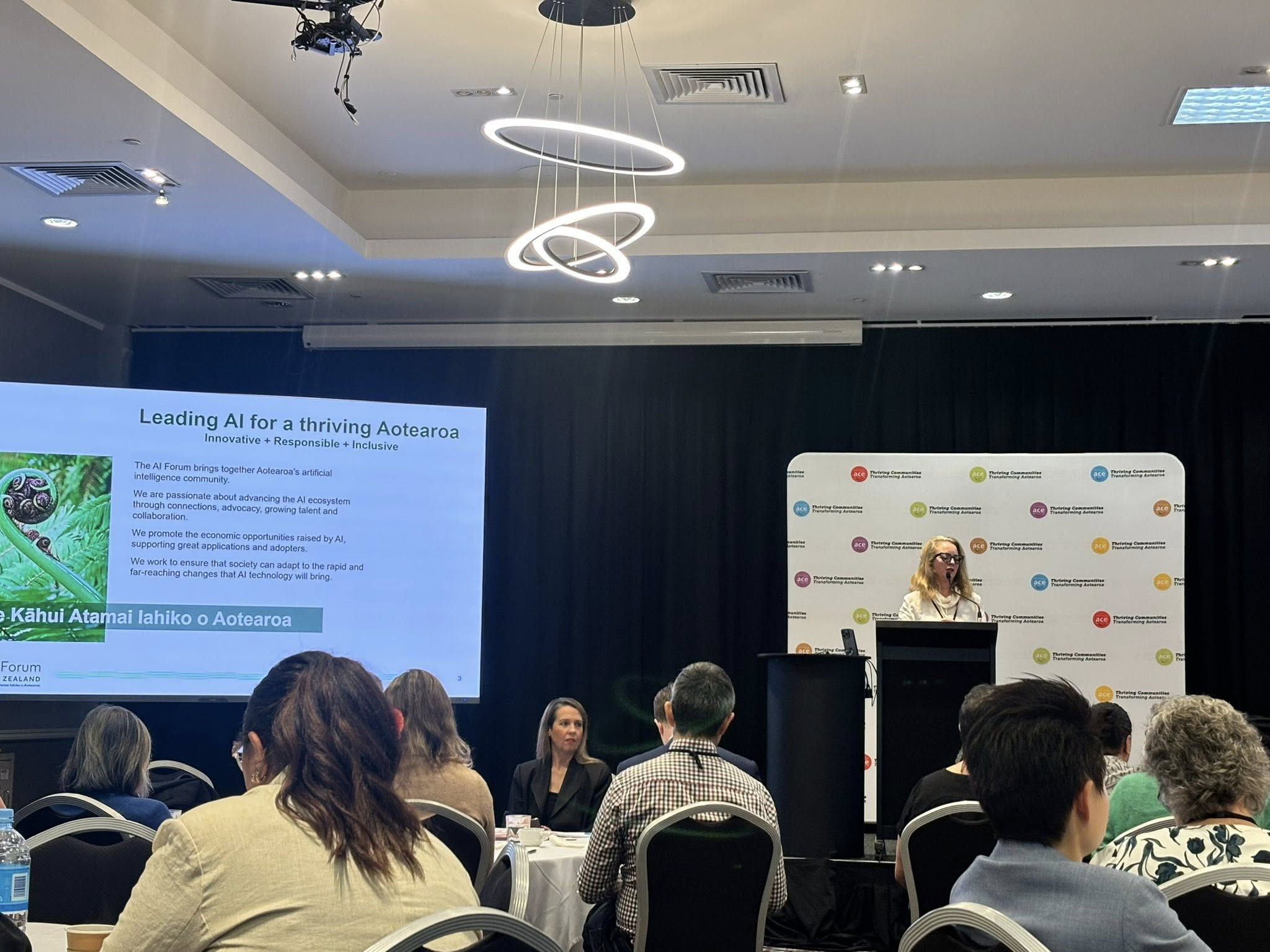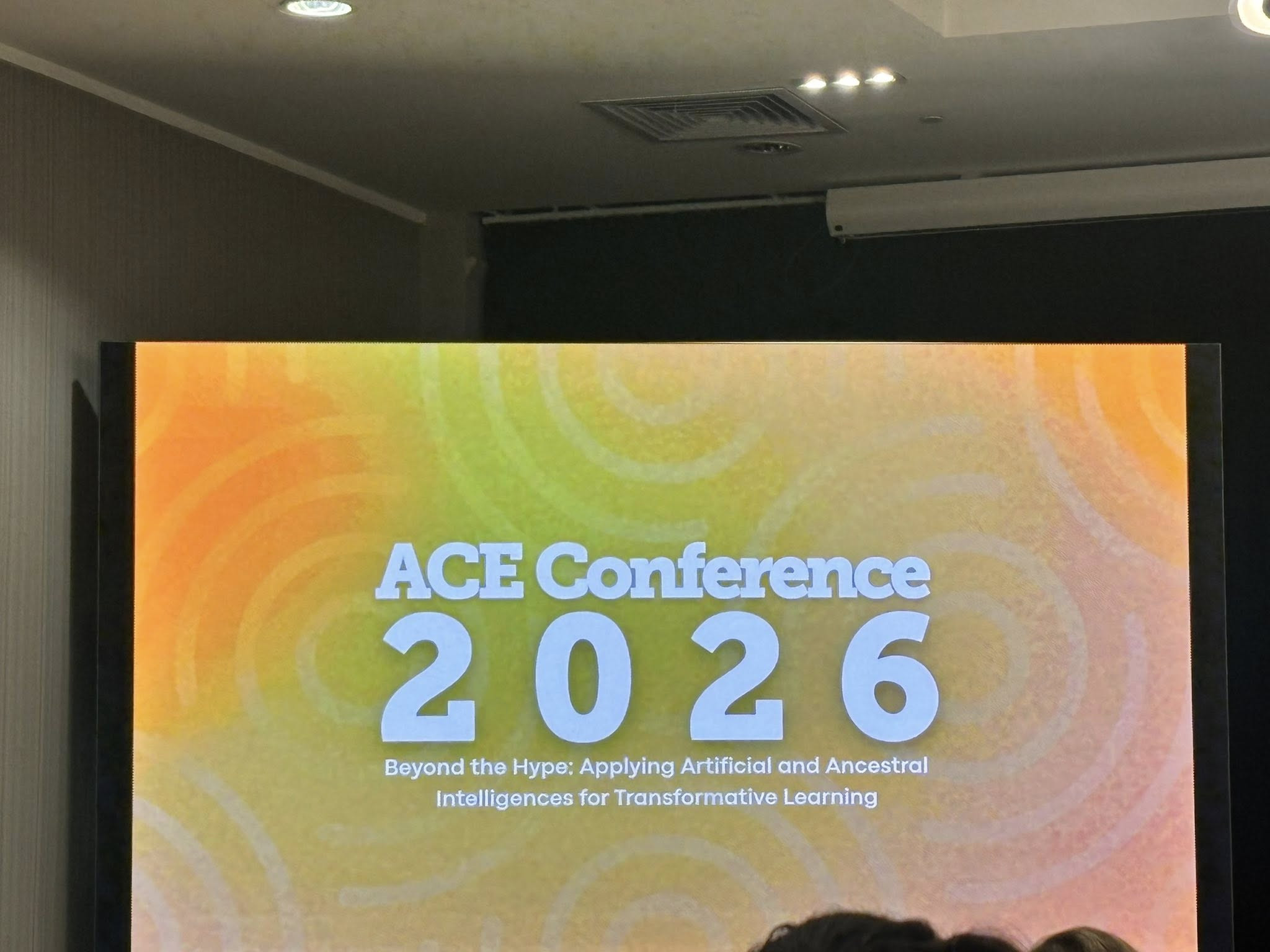


Community Education team participated in the annual ACE Conference. This year’s theme, “Beyond the Hype: Applying Artificial and Ancestral Intelligences for Transformative Learning,” encouraged us to reflect on the rapid rise of Artificial Intelligence (AI). In what has been described as the “Age of Monsters,” it is important to pause, understand how AI works, and consider both its risks and opportunities.
AI can be grouped into three main types:
Artificial Narrow Intelligence (ANI): systems designed to perform specific tasks
Artificial General Intelligence (AGI): systems that can apply knowledge across different areas
Artificial Super Intelligence (ASI): future systems that may surpass human intelligence. Tools like ChatGPT, Gemini, and Claude fall into the first category—ANI.
As AI continues to evolve quickly, skills such as resilience, creativity, and curiosity are more important than ever. Kaiako (teachers) play a key role in helping students develop critical thinking, understand privacy, and use technology ethically.
Although many people feel uncertain about AI, it is already part of our daily lives—from GPS navigation to voice assistants like Siri and Alexa. Its growth has been incredibly fast; while the aviation industry took decades to reach 60 million users, ChatGPT reached similar numbers in just two months.
AI can be seen as a “bullet train”—fast-moving and constantly advancing. To keep up, we must stay adaptable and informed. Most importantly, we must remember that humans remain in control, guiding how this powerful technology is used for the future.